


Latest
Story
30 June 2026
Planting through uncertainty, why acting early matters for farmers like Ervin
Learn more
Story
24 June 2026
United Nations System and Caribbean Governments affirm development partnership under new MSDCF
Learn more
Press Release
11 June 2026
Belize advances update of its protected areas plan with support from IOM and the European Union
Learn more
Latest
The Sustainable Development Goals in Belize
The Sustainable Development Goals are a global call to action to end poverty, protect the earth’s environment and climate, and ensure that people everywhere can enjoy peace and prosperity. These are the goals the UN is working on in Belize:
Publication
08 October 2026
United Nations Belize 2026 Country Implementation Plan
The 2026 Country Implementation Plan (CIP) for Belize is the final CIP under the United Nations Multi-Country Sustainable Development Cooperation Framework (UNMSDCF) for the English and Dutch-speaking Caribbean covering the period 2022-2026. This Plan brings 171 programmatic actions from 15 UN agencies into a single, validated framework, capturing the collective programmatic commitment of the UN System in Belize to the Government and people of this country.The CIP is aligned to Belize’s Medium-Term Development Strategy (MTDS 2022-2026), the Sustainable Development Goals (SDGs), and the four strategic priorities of the MSDCF.
1 of 5

Publication
31 July 2024
Decent Work Country Programme, Belize 2024-2029
The Belize Decent Work Country Programme (DWCP) for 2024-2029 sets out the common commitment of the Government of Belize, workers’ and employers’ organisations, and the International Labour Organization (ILO) to promote decent work, and ensure it is at the heart of national development in Belize. During the period 2024-2029, the ILO will work in partnership with the Government of Belize and the social partners to address national decent work challenges. The ILO’s approach reflects the development of a ‘new generation’ of DWCPs designed to support achievement of both national and international development goals, and faciliate partnerships that can produce meaningful change. Activities and results identified in this document are based on clear theories of change, developed through consultation with Belizean constituents.
1 of 5
Publication
30 May 2025
United Nations Belize: 2024 Country Results Report
The 2024 Country Results Report tells of strong partnerships and an unwavering commitment to deliver sustainable, inclusive development to the people of Belize. It highlights achievements in meeting measurable targets, and relates stories of resilience, empowerment, and change, shaped by the people of Belize with the assistance of the United Nations and its development partners. Over the year, the United Nations Country Team in Belize worked alongside Government counterparts, civil society, youth leaders, and communities to accelerate development priorities outlined in the National Medium-term Development Strategy (MTDS). These collaborations yielded social protection reforms, stronger national data and statistical systems, and targeted support to thousands of families, farmers, migrants, women and children across the country. These outcomes have laid the foundation for the UN's continued development partnership with the Government and people of Belize.
1 of 5
Publication
14 July 2026
Road map for the implementation in Belize of the Regional Agreement on Access to Information, Public Participation and Justice in Environmental Matters in Latin America and the Caribbean
The Regional Agreement on Access to Information, Public Participation and Justice in Environmental Matters in Latin America and the Caribbean (the Escazú Agreement), was adopted on 4 March 2018 and entered into force on 22 April 2021. Belize became a Party to the Agreement on 5 June 2023.This implementation road map was developed in line with the decision of the Conference of Parties that such guidance should be produced with the support of ECLAC and following consultation with the public, Indigenous Peoples and local communities.
1 of 5

Publication
04 May 2023
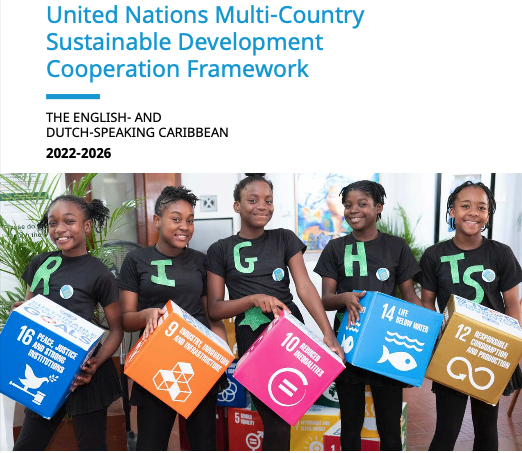
United Nations Multi-Country Sustainable Development Cooperation Framework: The English- and Dutch-Speaking Caribbean 2022-2026
The Multi-Country Sustainable Development Cooperation Framework (MSDCF) for the English- and Dutch-speaking Caribbean, covering the period 2022-2026, is the most important instrument for planning and implementation of the UN development activities towards the fulfilment of the 2030 Agenda. This framework has been developed as the world continues to grapple with the COVID-19 pandemic. In the Caribbean, as elsewhere, the impact of the pandemic aggravated and revealed existing structural vulnerabilities and provides the opportunity to ‘build back better’. To address such vulnerabilities the UN and the governments in the region are committing to contribute to significant structural changes in the economies and governance systems of the countries, towards:
» Economic resilience and shared prosperity;
» Equality and well-being;
» Resilience to climate change and shocks, and sustainable natural resource management;
» Peace, safety, justice, and the rule of law.
Under each of these four priority areas, specific desired changes were defined for UN contribution. The Vision is for the region to become more resilient, possess greater capacity to achieve all the SDGs, and become a place where people choose to live and can reach their full potential. UN contributions will be operationalised at the country level, while adopting regional solutions where relevant, fostering regional cooperation and integration, and being guided by the principle of ‘leaving no one behind’.
1 of 5
Story
30 June 2026
Planting through uncertainty, why acting early matters for farmers like Ervin
In the quiet farming community of Conception Village in northern Belize, the day begins before sunrise. For Ervin Aban, those early hours are part of the daily effort to keep his farm going.At just five years into farming on his land independently, Ervin has already built a life around farming, one rooted in resilience, independence, and deep community ties. He grows cabbage, sweet corn, cilantro, cucumbers, and watermelons, tending each crop with care and determination.“I like that I’m my own boss,” he says with a small smile, glancing across his fields. “And when things are going good, I can help others too, give work to people right here in the village.”But lately, things have not been going as planned.Even before the forecasted drought fully settles in, Ervin says he is already seeing signs of trouble. The rain has been inconsistent, the heat is more intense, and the soil is less forgiving.“This year, the dry coming early,” he explains as he walks between rows of cabbage. “You could feel it… and now you could see it too.”
The Belize Meteorological Service has warned that districts like Corozal could experience below-average rainfall this season, influenced by the El Niño climate pattern. For farmers like Ervin, this is more than a forecast, it is a looming threat. He knows it well. Just two years ago, drought conditions devastated his farm.“I lost over 2,000 watermelon plants,” he recalls. “Just like that...gone. It hurt, because that is your work, your time, your investment.”As we continue across his farm, Ervin points toward his cabbage patch. At first glance, the leaves appear healthy, but closer inspection reveals small holes and damage creeping across the crops.“Drought is not just about no water,” he explains. “It brings more pests.” When surrounding vegetation dries out, insects migrate in search of new food sources—often straight to cultivated farms.“When they have nowhere else to go, they come here,” he says. “And they destroy everything in one night sometimes.”It’s a ripple effect that can quickly spiral out of control, less water leads to weaker crops, which attract more pests, resulting in greater losses for farmers already struggling.But this year, something is different. For the first time, Ervin is among a group of pre-identified farmers receiving anticipatory cash assistance, support delivered before the drought fully takes hold.Through a collaboration between the Ministry of Agriculture, Food Security and New Growth Industries, the National Meteorological Services, and the United Nations World Food Programme (WFP), Belize has activated its Anticipatory Action (AA) mechanism for drought.This means that farmers in vulnerable districts like Corozal receive financial support early, giving them time to prepare.For Ervin, that support has already made a difference. “With the money, I buy tarpaulin to protect my seedlings,” he says, gesturing toward a shaded nursery area. “And I buy gas to run my water pump from the well.”These may seem like small adjustments, but in farming, timing is everything. Acting early can mean the difference between saving a crop or losing it entirely.
Still, uncertainty lingers.“If the dry continues, I could still lose everything,” Ervin admits. “And if I don’t have crops, I don’t have income.”The consequences ripple beyond his own household. Like many farmers, Ervin supports extended family members, and his produce contributes to food availability across districts.“Belize depends on farming,” he says. “If drought affects us, it affects everybody...the food we grow, the price, the availability.”Across the Caribbean, the effects of El Niño have begun to reshape weather patterns—bringing prolonged dry spells or increased rainfall, rising temperatures, and placing added stress on water systems and agriculture. These shifts pose serious risks to food security, especially in countries where local farming is central to both livelihoods and national supply.That is why anticipatory action is gaining importance—not only as a response, but as a strategy.By working closely with the National Meteorological Services, WFP has helped strengthen how climate information is used in Belize. Seasonal forecasts are now better interpreted and communicated, enabling early warnings to translate into early action on the ground.For farmers like Ervin, it means having a fighting chance. Belize’s progress in building an anticipatory action system for drought has been made possible through strong partnerships and the support of committed donors, including the Government of Canada, the European Union, the German Government, the Government of Ireland, and the United States Government.Their contributions are helping ensure that resources reach farmers before disaster strikes, protecting livelihoods, strengthening resilience, and safeguarding food systems.For Ervin Aban, that support is not abstract, it is visible in the tarpaulin shielding his seedlings, in the pump drawing water from the earth, and in his determination to continue farming despite the odds.Because in Conception Village, the story of drought is still unfolding.But so too is the story of resilience—one farmer, one field, and one early action at a time.
The Belize Meteorological Service has warned that districts like Corozal could experience below-average rainfall this season, influenced by the El Niño climate pattern. For farmers like Ervin, this is more than a forecast, it is a looming threat. He knows it well. Just two years ago, drought conditions devastated his farm.“I lost over 2,000 watermelon plants,” he recalls. “Just like that...gone. It hurt, because that is your work, your time, your investment.”As we continue across his farm, Ervin points toward his cabbage patch. At first glance, the leaves appear healthy, but closer inspection reveals small holes and damage creeping across the crops.“Drought is not just about no water,” he explains. “It brings more pests.” When surrounding vegetation dries out, insects migrate in search of new food sources—often straight to cultivated farms.“When they have nowhere else to go, they come here,” he says. “And they destroy everything in one night sometimes.”It’s a ripple effect that can quickly spiral out of control, less water leads to weaker crops, which attract more pests, resulting in greater losses for farmers already struggling.But this year, something is different. For the first time, Ervin is among a group of pre-identified farmers receiving anticipatory cash assistance, support delivered before the drought fully takes hold.Through a collaboration between the Ministry of Agriculture, Food Security and New Growth Industries, the National Meteorological Services, and the United Nations World Food Programme (WFP), Belize has activated its Anticipatory Action (AA) mechanism for drought.This means that farmers in vulnerable districts like Corozal receive financial support early, giving them time to prepare.For Ervin, that support has already made a difference. “With the money, I buy tarpaulin to protect my seedlings,” he says, gesturing toward a shaded nursery area. “And I buy gas to run my water pump from the well.”These may seem like small adjustments, but in farming, timing is everything. Acting early can mean the difference between saving a crop or losing it entirely.
Still, uncertainty lingers.“If the dry continues, I could still lose everything,” Ervin admits. “And if I don’t have crops, I don’t have income.”The consequences ripple beyond his own household. Like many farmers, Ervin supports extended family members, and his produce contributes to food availability across districts.“Belize depends on farming,” he says. “If drought affects us, it affects everybody...the food we grow, the price, the availability.”Across the Caribbean, the effects of El Niño have begun to reshape weather patterns—bringing prolonged dry spells or increased rainfall, rising temperatures, and placing added stress on water systems and agriculture. These shifts pose serious risks to food security, especially in countries where local farming is central to both livelihoods and national supply.That is why anticipatory action is gaining importance—not only as a response, but as a strategy.By working closely with the National Meteorological Services, WFP has helped strengthen how climate information is used in Belize. Seasonal forecasts are now better interpreted and communicated, enabling early warnings to translate into early action on the ground.For farmers like Ervin, it means having a fighting chance. Belize’s progress in building an anticipatory action system for drought has been made possible through strong partnerships and the support of committed donors, including the Government of Canada, the European Union, the German Government, the Government of Ireland, and the United States Government.Their contributions are helping ensure that resources reach farmers before disaster strikes, protecting livelihoods, strengthening resilience, and safeguarding food systems.For Ervin Aban, that support is not abstract, it is visible in the tarpaulin shielding his seedlings, in the pump drawing water from the earth, and in his determination to continue farming despite the odds.Because in Conception Village, the story of drought is still unfolding.But so too is the story of resilience—one farmer, one field, and one early action at a time.
1 of 5

Story
24 June 2026
United Nations System and Caribbean Governments affirm development partnership under new MSDCF
The Framework was presented during the 2026 Annual Coordination Meeting of the United Nations MSDCF for the Caribbean, convened on 16 June 2026. Over the next five years, the new MSDCF will guide coordinated United Nations support to national and regional priorities, helping to accelerate progress toward the Sustainable Development Goals and deliver meaningful results for people and communities across the region.Chaired by Belize, the hybrid meeting brought together Member States, Resident Coordinators, regional partners, and United Nations entities for a focused regional dialogue on results, priorities, and the next chapter of cooperation. Participants reflected on the achievements and lessons of the MSDCF 2022-2026.“With Governments and development partners we have worked together to shape a Multi-Country Cooperation Framework that reflects national priorities and regional aspirations. This Framework is about creating opportunities, strengthening resilience, protecting the most vulnerable, and delivering tangible results in the daily lives of Caribbean citizens.” Mr. Raul Salazar, UN Resident Coordinator for Belize and El Salvador, and Chair of the Regional Steering Committee of the MSDCF.In his remarks, H.E. Oscar Arnold, Chief Executive Officer, Ministry of Foreign Affairs and Foreign Trade of Belize, lauded the partnership between Caribbean governments and the United Nations that underpinned the Cooperation Framework: “The MSDCF has been shaped by the priorities, experiences and aspirations of our countries, and stands as a testament to our collective commitment to build a more resilient, inclusive and prosperous Caribbean.” Guided by the theme, One Caribbean. One Framework. One Future, the 2026 Annual Coordination Meeting placed regional partnership at the center of the conversation. The theme carried a simple and powerful message: the Caribbean shares many of the same challenges and aspirations, and through one shared framework, countries and the United Nations can work together toward a stronger future.Participants also discussed the strategic direction of the MSDCF 2027-2031, which is designed to respond to the Caribbean’s evolving development realities and accelerate progress toward the 2030 Agenda for Sustainable Development. The Framework is organized around two Strategic Pillars. The first, Economic and Ecosystem Resilience, focuses on economic diversification, skills development, and strengthening ecosystem resilience. The second, Future Ready People and Empowered Communities, focuses on integrated services and addressing crime and violence prevention. Together, these pillars speak to stronger economies, protected ecosystems, better access to services, safer communities, and a region better prepared to meet the challenges and opportunities ahead.Through the presentation of the MSDCF 2027-2031, Caribbean governments and the United Nations reaffirmed their commitment to national ownership, regional cooperation, and meaningful results for people, communities, and future generations.The focus now turns to implementation planning, coordination, and delivery under the new Framework, ensuring that regional priorities translate into practical action at the national level across countries.The meeting concluded with a shared commitment, grounded in a common vision, to collective action and partnership in advancing sustainable development across the Caribbean. About the United Nations Caribbean:
The United Nations Caribbean brings together UN agencies, funds and programmes working with governments and regional institutions across the English and Dutch speaking Caribbean. Through the MSDCF, the UN works as one system to support national development priorities, advance the Sustainable Development Goals, and respond to shared regional challenges through coordinated, people centered and results focused cooperation. Media Contacts
Lisa Stanford Jones
Programme Coordinator Associate for the MSDCF
UN Resident Coordinator Office for Belize
lisa.stanfordjones@un.orgCindy Novelo
Foreign Service Officer
Ministry of Foreign Affairs and Foreign Trade
belizemfa@btl.net
The United Nations Caribbean brings together UN agencies, funds and programmes working with governments and regional institutions across the English and Dutch speaking Caribbean. Through the MSDCF, the UN works as one system to support national development priorities, advance the Sustainable Development Goals, and respond to shared regional challenges through coordinated, people centered and results focused cooperation. Media Contacts
Lisa Stanford Jones
Programme Coordinator Associate for the MSDCF
UN Resident Coordinator Office for Belize
lisa.stanfordjones@un.orgCindy Novelo
Foreign Service Officer
Ministry of Foreign Affairs and Foreign Trade
belizemfa@btl.net
1 of 5

Story
28 April 2026
Maya communities in Belize lead the way as the EU-funded ILO PROSPER project advances
The EU-funded ILO PROSPER project has moved from planning to action in southern Belize, with field visits and community presentations across Maya villages. These engagements are helping to ground project interventions in lived realities –listening first and building solutions together.PROSPER – Participation, Ownership, and Sustainable Progress for Economic Resilience – is a four-year initiative (2024–2028) implemented by the ILO in partnership with the Government of Belize and funded by the European Union. It aims to strengthen livelihoods and decent work opportunities in 15 Indigenous communities by supporting two priority value chains: tourism and cacao agroforestry.Community voices drive the agendaIn late March 2026, the ILO PROSPER team, led by National Implementation and Monitoring Officer Kylah Ciego, visited communities including San Pedro Columbia, San Jose, Santa Cruz, Pueblo Viejo, Na Luum Ca, Blue Creek, and institutions such as ITVET and the Tu’mil’kin Learning Center.At a community meeting in Blue Creek attended by approximately 30 farmers, women, youth, business owners and village leaders, participants shared candid feedback. Cacao farmers raised concerns about crop disease, limited technical assistance, poor market access, and price fluctuations. Women entrepreneurs highlighted the need for skills training and cooperative development. Community members also called for practical, hands-on training delivered by experienced local practitioners.“The community sees real potential in both tourism and agriculture, especially cacao,” ILO project team lead noted. “But there are significant barriers – financing, organization, and technical capacity – that the project must address alongside local stakeholders.”Respecting Indigenous rightsA distinctive feature of PROSPER is its commitment to the Maya Free, Prior and Informed Consent (FPIC) protocol. This protocol, formalized following a landmark 2015 Caribbean Court of Justice (CCJ) ruling that recognized Mopan and Q’eqchi Maya land rights, requires that the Government and third parties consult with Maya communities before proceeding with initiatives that may affect their land, territory and resources. It establishes that communities should be:Free to make decisions without pressure or coercionPriorly consulted before activities beginInformed through clear, accessible information about the projectAble to give or withhold consent based on their own decision-making processesThe Office of Indigenous Affairs oversees compliance with the protocol. To advance formal consultations, the project has officially requested the Ministry of Rural Transformation, Community Development and Local Government, to engage the Indigenous Peoples Affairs Office to facilitate the FPIC process for ten communities now assessed as ready for project engagement. Culture and resilienceBeyond economic discussions, the field visits coincided with vibrant cultural activities. Team members observed Deer Dance rehearsals and Maya Day celebrations in Blue Creek, underscoring the richness of Maya traditions and local craftsmanship – cultural heritage assets that the project’s tourism component aims to support and promote sustainably.Next stepsThe PROSPER team will continue engagement with farmers, women’s groups, youth and business stakeholders. By combining community engagement, skills development and market support with strong safeguards such as FPIC, the initiative is laying the foundation for resilient local economies that are both culturally grounded and economically viable.
1 of 5

Story
30 March 2026
Belize comes together to improve how disaster losses and damages are tracked and monitored
When disasters strike in Belize, the full picture of their impact on people, livelihoods, infrastructure, and the environment can be difficult to capture. Recognizing this challenge, national institutions came together to explore how quality data, accompanied by better data governance, shared standards, and coordination, could help the country more consistently record hazardous events and their associated losses and damages. The National Workshop on the DELTA Resilience Disaster and Hazardous Events, Losses and Damages Tracking and Analysis - organised with technical guidance from the United Nations Office for Disaster Risk Reduction (UNDRR) and in collaboration with the National Emergency Management Organization (NEMO) - brought together key national institutions on 11 February 2026 to discuss improvements to the way disaster losses and damages are documented, tracked and shared across the country. Workshop discussions focussed on how such improvements could support prevention, preparedness, response, and recovery through evidence-based decision-making, risk informed investments, and better national reporting on global agendas such as the Sendai Framework, the Sustainable Development Goals (SDGs), and the Global Goal on Adaptation (GGA). As part of these discussions, participants were introduced to DELTA Resilience, a tool to register and monitor losses and damages, which supports countries by offering updated methodologies, common standards, and practical functionalities for tracking both hazardous events and their impacts. It was presented to help institutions better understand what approaches and technologies are available to strengthen disaster loss and damage monitoring, and how these can complement existing national practices.In his remarks to the Workshop, United Nations Resident Coordinator in Belize, Raul Salazar, endorsed the need for improved historical impact records to reinforce national efforts at strengthening probabilistic hazard and risk assessments, and set thresholds for early warning systems that can support resilient recovery processes and overall preparedness. “No model is better than the data that support it,” he stressed. Stronger loss and damage information contributes directly to Belize’s progress in advancing inclusive, multihazard early warning systems under the Early Warnings for All (EW4All) initiative. At the heart of the shift is the recognition that disasters do not affect everyone equally. Disaggregated data, by geography, sector, sex, age, disability, helps reveal who is most at risk. As Captain Daniel Mendez, National Emergency Coordinator at NEMO, emphasized, “Keeping track of hazardous events and the losses and damages they cause gives us the evidence to prioritize where preparedness, response, and recovery investments are most needed.” Tracking losses at this level helps the country make decisions rooted in real impacts rather than assumptions.Equally important is the collaborative approach behind this work. In Belize, the disaster risk management system is led by NEMO but relies on many institutions working together, from technical agencies and environmental and climate authorities to academic institutions and local experts. Disaster risk reduction is a shared responsibility, and each institution holds a unique piece of the country’s disaster risk data landscape. Bringing these actors together supports the development of a more coherent national picture of loss and damage. Shared systems reduce duplication, improve data quality, and strengthen coordination across ministries. This also supports Belize’s reporting to global frameworks using information that already exists across national institutions.A more complete picture of losses, including those outside economic sectors and those triggered by slow onset events, also supports access to climate and resilience financing. The country’s Disaster Risk Financing (DRF) Policy and Implementation Plan highlights the importance of clear, documented evidence of disaster impacts to justify investments in preparedness, adaptation, and recovery. Better data helps Belize make stronger cases for support through loss and damage finance, adaptation funding, and risk‑transfer and insurance mechanisms. As Captain Mendez underlined, robust databases “allow us to identify systemic vulnerabilities across sectors and geographies,” helping Belize anticipate cascading risks rather than simply react to them.Sustaining this shift requires ongoing political commitment and strong governance. Keeping a national loss and damage database up to date, clarifying institutional roles, and consistently logging every event (large or small) are key steps toward strengthening prevention and preparedness. The UN Resident Coordinator highlighted how this effort also improves data governance overall, creating a shared evidence base that supports decision-making, planning, and resource allocation. Tracking losses ensures the country learns from each event and uses that knowledge to protect lives, livelihoods, and development gains. In the words of the Resident Coordinator, “for disaster risk to be managed, it must first be understood, and for this, measuring is a mandatory step.” Belize is making that step, and in doing so, is better equipped to safeguard what matters most. _______________ This work is supported by the European Union–Caribbean Resilience Programme (EU-CA-RES), implemented jointly by the European Union, UNICEF, WFP, UNDP, and UNDRR. It is part of the Belize Inclusive Resilience in Safe and SMART Spaces Joint Programme, supported by the UN Joint SDG Fund, EU-CA-RES, and the Strengthening Enabling Environment for Strengthening Multi Hazard Early Warning Systems (MHEWS) in Belize, supported by the Climate Risk and Early Warning Systems (CREWS) initiative.
1 of 5

Story
04 June 2025
Joint National Steering Committee convenes to advance Cooperation Framework goals in Belize
The Government of Belize and the United Nations Country Team (UNCT) convened its 5th Joint National Steering Committee Meeting, co-chaired by H.E. Amalia Mai, CEO in the Ministry of Foreign Affairs, Foreign Trade and Culture, and Mr. Raul Salazar, United Nations Resident Coordinator for Belize and El Salvador. The Joint Steering Committee provides strategic oversight and guidance for the United Nations Multi-Country Sustainable Development Cooperation Framework (UNMSDCF) 2022-2026, which covers 22 countries in the English and Dutch-speaking Caribbean and was adopted by Belize in December 2021.The meeting facilitated an exchange between Heads of UN Agencies, Funds and Programmes and Chief Executive Officers (CEOs) across several government line ministries around key areas of strategic cooperation. During this dialogue, the Government outlined its strategic priorities under Plan Belize 2.0, which is linked to the Pact for the Future adopted by United Nations Member States in 2024. The meeting also endorsed re-alignment of UNMSDCF 2022-2026 with Belize’s Medium-term Development Strategy (MTDS) 2022-2026. A key agenda item was the UNCT’s presentation of the United Nations Country Results Report (CRR) on the Country Implementation Plan (CIP) for 2024-2025. The CIP includes 161 projects to be implemented by 15 UN Agencies, Funds and Programmes working in Belize with an estimated budget of US $47 million. The UNCT also led a discussion on the Funding Compact 2.0 including opportunities to expand programming and partnerships in Belize.Mr. Salazar reaffirmed the commitment of the UN Country Team to continue its partnership with the Government on advancing sustainable development in Belize. "In the 2025 context, the UN Secretary General’s call for global unity remains more critical than ever to leave no one behind and achieve the SDGs by 2030. As the UN marks its 80th anniversary this year, it is both a time to celebrate key milestones and achievements, but also to innovate and adapt in a changing global environment. The 2024 Voluntary National Review (VNR) on all 17 SDGs shows that Belize has made progress in several areas including a reduction of multidimensional poverty from 36.5% in 2021 to 26.4% in 2023 (SDG1), reduction of unemployment rate from 13.7% to 2.1% in 2024 (SDG 8), and conserving 30% of Belize’s ocean space under the Blue Bond (SDG13 & 14) to name a few examples. The UN Country Team stands ready to continue to support Belize in achieving its Medium-Term Development Strategy and SDG acceleration by 2030.” The meeting closed with an exchange around the International Cooperation Council (ICC) established by the Government in 2023, the UN’s 80th anniversary commemoration in Belize, and the roadmap for the new UN Multi-Country Sustainable Development Cooperation Framework (UNMSDCF) 2027-2031 currently in the planning and development stage. Contact:
Mirsy Ponce
Executive Associate
Office of the UN Resident Coordinator
United Nations in Belize
Phone: +501-822-2171
Email: Mirsy.Ponce@un.org
Mirsy Ponce
Executive Associate
Office of the UN Resident Coordinator
United Nations in Belize
Phone: +501-822-2171
Email: Mirsy.Ponce@un.org
1 of 5

Press Release
11 June 2026
UNIDO and Japan are supporting development of Belize's first green and blue industrial policy
Belize is a small State, and its economy is currently heavily dependent on tourism and a limited number of commodity export products, which makes it vulnerable to trade shocks in addition to climate-related disasters that deter tourism. Its first industrial policy with a focus on green and blue industry can serve as a key driver to diversify and strengthen its economy.Narda Garcia, CEO of Investment and Civil Aviation in the Office of the Prime Minister of Belize, stated, “We have the second largest barrier reef in the world. We have one of the most intact forest systems in Central America. And these are not scenic backdrops. They are industrial assets. […] A blue-green industrial strategy means turning our ocean into a regulated, certified, high-value export platform. From our green space, we want to turn our forest into a source of biomaterials, carbon credits and resilient energy.”Cacao, coconut, seaweed and boatbuilding could play a central role in Belize’s future. These sectors have been identified as key opportunities to strengthen the country’s green and blue industries. Specifically, cacao, coconut and the bioeconomy have been identified as key value chains to drive growth for the green industry sector. While for the blue industry sector, boat manufacturing, the seaweed industry and sargassum valorization and fisheries have been identified as the promising opportunity areas. “Because Belize possesses abundant natural and marine resources, green and blue industries are especially important. These industries can create jobs while contributing to environmental protection. Japan believes that Belize has the potential to become a good example of sustainable development in the region,” said the Ambassador of Japan to Belize, Yamakura Ryosuke.Belize's strategic vision is clear: develop an industrial policy that not only drives economic growth, creates jobs and strengthens the industrial base, but also focuses on sustainability. CEO Garcia went on to state further, “The old type of industrial strategy said grow first, clean up later. We cannot afford the later or the latter. Our industrial strategy tells us to invest in the reef and the reef will invest back. Protect the forest and the forest will export for generations.”Stakeholder consultationsTo ensure Belize’s industrial policy is shaped by real-world experience, recent field missions engaged stakeholders across the government, private sector and academia. By presenting preliminary findings and gathering first-hand insights from entrepreneurs shaping Belize’s economic landscape, the team managed to refine its preliminary research that will help inform an inclusive and evidence-based policy framework.Alongside a full day of stakeholder consultations, the team also conducted a total of ten site visits to local producers to better understand production processes and bottlenecks. Thus far, the team has visited two coconut farms and a processing plant, a cacao processing plant, the Belize Marketing and Development Corporation, a shrimp farm, two boatbuilders and two fisheries cooperatives. The growing focus on blue and green industry in Belize presents a significant opportunity to foster sustainable economic growth, strengthen local value chains and create new livelihoods. By building on the country’s natural resources and focusing on more value addition, these sectors can contribute to a more resilient, inclusive and competitive economy for decades to come. For more information, please contact: Florian HespeelCommunications and Project Associate – Division of Industrial Policy Advice and Capacity Developmentf.hespeel@unido.org
1 of 5
Press Release
11 June 2026
Belize advances update of its protected areas plan with support from IOM and the European Union
The update aims to strengthen biodiversity conservation while supporting the livelihoods of communities that depend on natural resources. Protected areas play a vital role in safeguarding water resources, supporting tourism and fisheries, conserving biodiversity and sustaining local economies. Ensuring their effective management is essential to the country’s long-term environmental, social and economic resilience. The process will include consultations with government institutions, protected area co-managers, local communities, Indigenous Peoples, civil society organizations, private sector representatives and gender-responsive voices. The objective is to ensure that the updated framework reflects diverse perspectives, responds to current challenges and opportunities, and builds on Belize’s long-standing tradition of collaborative protected area management. The update is being advanced alongside the development of Belize’s first Integrated Border Management Strategy. In Belize’s western and southern regions, protected areas, community livelihoods, human mobility and border governance challenges often overlap, making stronger conservation coordination essential to effective Integrated Border Management. The initiative forms part of the broader EU-IOM Integrated Border Management programme, which supports governance approaches in border regions where conservation, livelihoods and human mobility intersect. The policy and plan, formally known as the National Protected Areas Policy and System Plan (NPAPSP), is being updated by the National Biodiversity Office (NBIO), under the Ministry of Sustainable Development, Climate Change and Solid Waste Management, with technical support from the International Organization for Migration (IOM) and funding from the European Union (EU) through an EU-IOM Integrated Border Management (IBM) initiative. Director of the NBIO, Mr. Saul Cruz, highlights that “the update was overdue, with the NPAPSP dating back to 2005. It is expected that the new Policy and Plan reflect a ten-year strategy, aligning with the 2025 – 2035 National Biodiversity Strategy and Action Plan and other national strategies. It will reflect the all-of-society approach and ownership, emphasizing the role of government, civil society organisations, communities and indigenous people in its implementation.” The partnership with the EU and IOM provides a unique opportunity to also support co-managers through training, equipment and much-needed grant support to improve intelligence-based enforcement and day-to-day monitoring of protected areas. To ensure national ownership, the entire process is overseen by a National Steering Committee chaired by the Ministry of Foreign Affairs of Belize. A revised NPAPSP is expected to be ready for national review and validation by government, co-managers and other key stakeholders towards the end of 2026. --- For more information contact: Mr. Saul Cruz, Director, National Biodiversity Office Ministry of Sustainable Development, Climate Change and Solid Waste Management Tel: +501-828-9056, 828-9055 Email: info.nbio@environment.gov.bz Idelki Familia, Programme Officer International Organization for Migration Belize Tel: +501-223-9500 Email: ifamilia@iom.int Elizabeth Lanzi Mazzocchini – Communication Coordinator Delegation of the European Union to Jamaica, Belize and The Bahamas Tel. +501 6149186 Email: Elizabeth-Mary.LANZI-MAZZOCCHINI@eeas.europa.eu
1 of 5
Press Release
29 May 2026
PAHO/WHO partners with the Ministry of Health & Wellness to commemorate World No Tobacco Day 2026
The forum brought together youths from across the Belize District, with student representation from the Department of Youth Services, St. John’s College High School, Nazarene High School, Gwen Lizarraga High School, and the Institute for Technical and Vocational Education and Training (ITVET). Students were accompanied by guidance counsellors and teachers, who actively participated throughout the sessions.This activity marks the first in a series of nationwide youth forums and community sensitization activities aimed at addressing nicotine and tobacco use among young people. The forums form part of a broader regional effort to reduce tobacco consumption and environmental emissions in Latin America. In consultation with the Ministry of Health and Wellness, Belize was selected by the Pan American Health Organization/World Health Organization (PAHO/WHO), in partnership with Bloomberg Philanthropies, as one of the countries to participate in the “Towards a Smoke‑Free and Emission‑Free Latin America” Initiative. In 2001, South America became the first subregion in the Americas to accomplish 100% smoke-free environments in line with Article 8 of the World Health Organization Framework Convention on Tobacco Control.Tobacco use remains one of the most significant public health challenges in Latin America, contributing to more than eight million deaths each year. Of these, 1.3 million are attributed to exposure to second‑hand smoke, underscoring the urgent need for smoke‑free environments to protect the public, especially vulnerable groups such as children and adolescents.
1 of 5
Press Release
08 May 2026
Belize Triggers Anticipatory Action to support Farmers Ahead of Drought Risk
The Ministry of Agriculture, Food Security and New Growth Industries, in collaboration with the National Meteorological Services and the United Nations World Food Programme (WFP), has activated Belize’s Anticipatory Action (AA) mechanism for drought. This early support will enable farmers to take proactive measures, such as investing in water‑storage equipment, drought‑tolerant seeds, or irrigation supplies, enabling them to protect their crops, safeguard their livelihoods, and reduce the impacts of the expected dry conditions before they occur. This initiative is the result of nearly two years of collaboration between the Ministry of Agriculture, the National Meteorological Services and WFP, working together to design a system tailored to Belize’s agricultural and climate context. It reflects the Government’s commitment to proactive disaster risk management, using science and data to protect smallholder farmers and strengthen resilience to combat shocks by acting before the impacts of drought are fully felt.”As climate risks intensify, acting early can mean the difference between a manageable shock and a devastating crisis”, said Brian Bogart, Representative and Country Director the World Food Programme Caribbean Multi-Country Office. ”Anticipatory action allows us to use scientific evidence to get ahead of drought impacts, protects farmer’s livelihoods and reduce the long-term cost of disasters”.The changes driven by El Niño and La Niña patterns, has led to more frequent and severe drought events, particularly affecting rainfed agriculture in the northern and western districts. These shocks place significant strain on Government resources and disrupt agricultural production, which affect smallholder farmers who rely on predictable rainfall for their incomes and food security. The development of the Anticipatory Action mechanism is timely as Belize continues to face increased climate pressures, with droughts, floods and tropical storms that threaten livelihoods, food security and economic stability.As part of this effort, WFP has been working closely with the National Meteorological Services to strengthen the use of climate information for acting early. This collaboration has focused on improving the interpretation and application for seasonal forecasts, supporting early warning communication and linking climate information to decision-making. This milestone has been made possible through the generous support of WFP’s donors, like the Government of Canada, the European Union, the German Government , the Government of Ireland and the United States Government. These contributions have supported the development of the anticipatory actions mechanism for drought and now enables Belize to take proactive, risk informed action. Investment in anticipatory action ensures that resources reach vulnerable communities early, reducing losses, protecting agricultural livelihoods and strengthening national resilience in the face of more frequent and intense climate shocks. For more information, please email bryanna.hadaway@wfp.org or contact: Bryanna Hadaway, WFP/ Bridgetown, Mob. +12468322788Juliette Maughan, WFP/Bridgetown, Mob. +12462678490
1 of 5
Press Release
18 December 2025
UNFPA Belize Donates Laptops to Strengthen Health Sector Supply Chain Management
This donation is aimed at enhancing the Ministry’s capacity to strengthen supply chain management of medical supplies, including reproductive health materials. By equipping the MoHW with modern technology, UNFPA supports more efficient monitoring and distribution, within the health sector.The contribution underscores UNFPA’s ongoing commitment through the LNOB Project to reduce inequalities in access to health care and to reinforce institutional capacity by fostering strategic partnerships with key government stakeholders.The Ministry of Health & Wellness expressed its appreciation for the timely support, noting that the equipment will play a vital role in improving health service delivery across Belize.
1 of 5
Latest Resources
1 / 11


Resources
03 July 2026


1 / 11